

Smoke the Killer in Building Fires
Most fatalities in building fires are linked to smoke inhalation, not burns.
1 min read

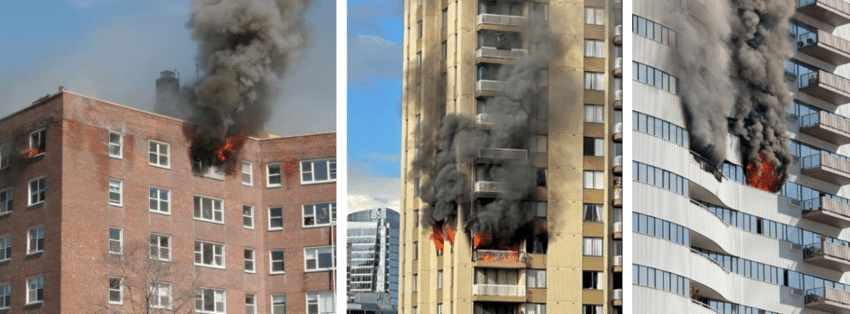
Smoke the Killer in Building Fires
When people imagine a building fire, they picture flames
Flames look dramatic. Flames make headlines
But smoke is what kills.
Smoke Moves Faster Than Fire
In multi-storey buildings, smoke spreads rapidly through corridors, stairwells, shafts, and ventilation systems. Long before flames reach occupants, smoke can fill escape routes and reduce visibility to near zero.
Most fatalities in building fires are linked to smoke inhalation, not burns.
Smoke contains:
Toxic gases such as carbon monoxide
Irritant chemicals from burning materials
Superheated air
Fine particles that damage lungs
You don’t need to be near the fire to be in danger.
Toxic Air Is the Real Threat
Modern buildings are filled with synthetic materials. Furniture, carpets, plastics, insulation.
When these burn, they release toxic gases that can incapacitate within minutes. Even small fires can generate lethal smoke concentrations.
Loss of visibility leads to disorientation.
Toxic gases lead to unconsciousness.
Heat intensifies the hazard.
The combination is deadly.
Why Existing Building Safety Is Not Enough
Buildings are designed with safety systems:
Fire alarms
Sprinklers
Fire-rated doors
Emergency lighting
These systems are essential. But they are primarily designed to control the fire and assist evacuation.
They do not guarantee clean air during escape.
Sprinklers suppress flames, not toxic smoke already generated.
Alarms notify occupants but do not protect breathing.
Stairwells can still accumulate smoke in certain scenarios.
Building systems reduce risk. They do not eliminate it.
Evacuation Depends on Air
Safe evacuation requires:
Visibility
Breathable air
Clear thinking
Smoke compromises all three.
In high-rise environments, evacuation may take time. During that time, exposure matters.
Preparedness should account for the most common cause of fatality in building fires: inhalation of toxic smoke.
Fire safety is not only about stopping flames.
It is about surviving the environment created by them.
Sure On Safety FZ LLC
FDBC2686, Compass Bldg, Al Hamra Ind Zone-FZ, RAK, UAE | License: 7012334
info@sureonsafety.com
+971 54 4697440
© 2026. All rights reserved.
London | Dubai